
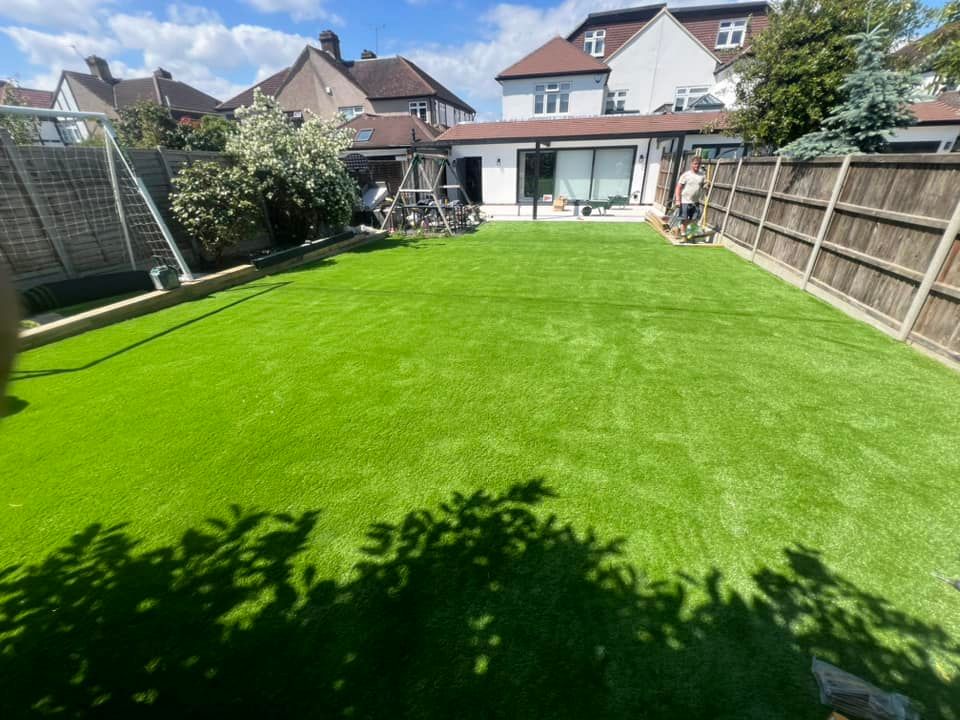
There's a moment most homeowners recognise. You open the back door on a spring morning, look out at the garden, and think — this year, we're actually going to do something about it.
Maybe it's been a building site since you moved in. Maybe the grass has given up and the borders are a mess. Maybe you've got a good garden that just doesn't work — no proper space to sit, no real structure, no sense that it was designed rather than just grown.
Whatever the starting point, a professionally designed and built outdoor space changes the way you live in your home. Not just on summer days, but through the spring, the autumn, and even the milder winter days that Kent's climate regularly delivers. The right landscaping transforms a garden from a space you manage into a space you actually use.
Marshall Brickwork & Construction has been transforming gardens and outdoor spaces across Kent for over 15 years. This guide covers everything you need to know about professional landscaping in Kent — from the services available and the materials worth investing in, to the seasonal timing, the costs, and the specific expertise that turns a brief into a finished outdoor environment that lasts.
What Professional Landscaping in Kent Actually Covers
The word "landscaping" covers an enormous range of work, and different contractors mean different things by it. Some focus exclusively on soft landscaping — plants, lawns, borders. Others specialise in hard landscaping — paving, walls, structures. The best results come from a team that understands both and knows how they work together.
Marshall's landscaping services in Kent cover the full range — hard and soft, structural and decorative, from complete garden overhauls to specific elements like artificial grass installation or raised bed construction. Here's what each category actually involves.
Hard Landscaping: The Structural Foundation
Hard landscaping is everything that's built rather than grown — the elements that define the structure of the garden and create the framework within which plants and lawns sit. Getting the hard landscaping right is what determines whether a garden feels designed or just assembled.
Patio construction is the anchor of most residential landscaping projects. A well-designed, correctly specified patio extends the usable square footage of a home and creates the outdoor living space that Kent families use from March through October. Material choices — Indian sandstone, porcelain, limestone, granite, concrete — each carry different aesthetic qualities and maintenance requirements. Marshall's patio expertise means the sub-base is engineered correctly, the drainage falls are designed in from the start, and the surface performs as well in year fifteen as it does in year one.
Garden walls and raised features are where Marshall's brickwork identity is most visible in a landscaping context. Retaining walls, raised planters, seating walls, garden steps, and level-change structures are all brickwork applications — and they need to be built to brickwork standards, not assembled decoratively. A retaining wall that holds significant soil load requires proper foundations, correct drainage provision behind the wall, and appropriate tie-back or mass. A raised planter built without adequate construction will bow, crack, and collapse within a few seasons. The difference between a landscape contractor with brickwork expertise at their core and one without is most visible in these structural elements.
Paths and stepping stones create routes through the garden and define how the space is used. From simple stepping stone paths through a lawn to formal dressed stone pathways and brick-edged gravel paths, the material and layout choices significantly affect the overall character of the garden.
Driveways and front gardens — Marshall's most in-demand service — are often part of a wider landscaping scheme. A new driveway that coordinates with a planting scheme, boundary wall, and planted border creates a complete front-of-house picture rather than a standalone installation.
Edging and containment — the detail that separates professional landscaping from amateur attempts. Clean, well-defined edges between paving and planted areas, between lawn and borders, between gravel and grass, create the architectural lines that make a garden look considered. Proper edging also performs a practical function: it prevents soft materials from spreading into hard surfaces and hard materials from contaminating planted areas.
Soft Landscaping: The Living Elements
Artificial grass installation has become one of the most frequently requested elements of Kent garden projects, and for good reasons that go beyond the low-maintenance appeal. Modern premium artificial grass is genuinely difficult to distinguish from a well-maintained natural lawn at casual inspection. It performs consistently through all seasons without the mowing, watering, feeding, aerating, scarifying, and patching that natural grass requires. It's particularly transformative in gardens with awkward sun or shade conditions where natural grass consistently struggles.
The quality of artificial grass installation is almost entirely determined by the base preparation. Excavate to the correct depth, install a geotextile weed membrane, compact a proper aggregate base, and the lawn stays level and drains perfectly for fifteen years. Cut corners on the base and you'll have bumps, soft spots, and drainage problems within twelve months. Marshall's groundworks expertise means the base is right — the most important part of any artificial grass installation.
Natural turf laying — for homeowners who prefer natural grass and have conditions that will support it — involves correct ground preparation, soil amendment where needed, and either seeded or turfed finish. Turf gives an instant result; seed takes longer but establishes a stronger root system. The preparation is what determines whether either option establishes well or struggles.
Planting schemes — shrubs, perennials, ornamental grasses, hedging, climbers, and seasonal interest plants selected for the specific conditions of the garden. Marshall's landscaping team works with the soil conditions, aspect, and shelter characteristics of each site to recommend plants that will genuinely thrive rather than just survive.
Tree and shrub removal and clearance — the starting point for many landscaping projects. Overgrown gardens, problem trees, invasive species, and the accumulation of years of neglect cleared to give the project a clean starting point.
Why Brickwork Expertise Transforms Landscaping Quality
This is the point that most homeowners don't fully appreciate when choosing a landscaping contractor, and it's worth explaining clearly.
Most landscaping companies are excellent at plants and lawns. Some are excellent at paving and hard surfaces. Very few have the structural brickwork knowledge to build the features that define a garden's architecture — retaining walls, raised planters, steps, terracing, seating structures — to the standard that will keep them performing for decades.
When a general landscaping company builds a retaining wall, they're typically working at the edge of their expertise. When Marshall Brickwork & Construction builds one, they're working at the centre of theirs. The mortar specification is correct. The foundation is properly dimensioned for the load. The drainage behind the wall is designed and built in. The bond pattern is structural, not just decorative. The finish at the top is properly capped and weathered.
The same principle applies to steps, raised planters, and any other structural masonry element in the garden. These features need to be built to brickwork standards. They're not decorative — they're structural — and they need the craft knowledge that genuine brickwork expertise provides.
This is what makes Marshall's landscaping capability genuinely different from the alternatives in the Kent market.
Artificial Grass in Kent: The Full Picture
Since artificial grass is one of the most frequently requested services, it deserves more than a brief mention.
Which Properties Benefit Most
Artificial grass delivers the most transformative results in gardens that have specific challenges natural grass can't overcome:
Shade — Under trees, next to tall fences, on north-facing aspects. Natural grass thins, patches, and eventually dies in persistent shade. Premium artificial grass maintains its appearance regardless of light levels.
Heavy use — Gardens used by children and dogs suffer from worn tracks, muddy patches, and the general destruction that enthusiastic small creatures cause. Artificial grass recovers instantly.
Awkward shapes — L-shaped gardens, narrow side returns, gardens with multiple level changes. Artificial grass can be cut and fitted to any shape. Natural grass is difficult to establish and maintain in awkward geometries.
Low-maintenance requirement — For busy families, investment properties, holiday rentals, or older homeowners for whom regular mowing is becoming difficult, the zero-maintenance appeal is genuinely compelling.
Quality Matters Enormously
The artificial grass market has a wide quality range — from budget products that look and feel artificial within two years, through to premium products that maintain their appearance and tactile quality for fifteen years or more.
The key specifications that distinguish quality products: pile height (35-40mm for realistic appearance), pile weight (at least 1,800 dtex), backing quality (drainage holes at adequate frequency), and UV stability (colour-fast formulation that doesn't fade in sunlight).
Marshall sources from established premium suppliers and installs to the correct base specification. It's one of those products where the quality of both the material and the installation are equally important.
The Installation Process Done Properly
A quality artificial grass installation in Kent involves:
Excavation to a minimum depth of 100mm (more on clay soils). The existing turf and topsoil are removed and taken off site.
Geotextile membrane laid across the formation to prevent weed penetration. This is the step most budget installations skip, and the reason weeds push through the surface within a season.
Aggregate base — typically 75mm of compacted Type 1 MOT hardcore covered by a layer of sharp sand, screeded and levelled. This is the foundation layer that determines whether the surface stays flat and drains correctly.
The artificial grass is rolled out, cut accurately to the shape of the area, joins are carefully seamed where multiple pieces are used, and edges are fixed cleanly against the containment (typically aluminium fixing board).
The finished installation is brushed up to lift the pile and given a final inspection before handover.
Garden Design: Thinking About the Whole Picture
The best landscaping projects think about the garden as a whole space rather than a collection of separate elements. A few design principles that consistently produce better outcomes for Kent homeowners:
Establish a clear structure first. The hard elements — patio, paths, walls, raised features — define the garden's architecture. Plant and lawn elements fill in around that structure. Designing the planting first and the hard landscaping second produces results that feel random.
Consider how the garden connects to the house. The relationship between the back door and the patio, between the kitchen and the outdoor dining space, between the living room and the garden view — these visual and functional connections determine how much the outdoor space is actually used.
Plan for all seasons. A garden that looks good only in high summer is missing most of the year. Structural evergreen planting, interesting bare-branch forms in winter, early spring bulbs, autumn colour — a well-considered planting scheme has something worthwhile in every month.
Think about levels. Flat gardens often feel smaller than they are. Introducing level changes — a raised patio area, a sunken seating nook, a terraced planting bed — creates visual interest and makes a garden feel more considered and more generous.
Design for your actual life, not an ideal version of it. A family with young children needs lawn and a hard surface. An older couple might prefer more planting and less maintenance. Someone who entertains needs a large, level patio and easy circulation. The best garden design starts with honest assessment of how the space will actually be used.
Landscaping in Kent's Towns: Local Conditions Matter
Kent's varied geography creates landscaping conditions that differ meaningfully across the county.
Medway towns (Rochester, Chatham, Gillingham, Strood) — Clay-heavy soils across much of this area mean drainage is the key consideration for any soft or hard landscaping. Gardens on clay need drainage incorporated into both hard surface installation and soft landscaping beds. Raised beds and improved soil areas often deliver better planting results than working with the native clay directly.
Sittingbourne and Swale — Similar clay conditions with the addition of the coastal influence that affects plant selection for more exposed gardens. Salt-tolerant plants, windbreaks, and robust hard materials are the specification priorities in more exposed Swale locations.
Maidstone and mid-Kent — More varied soils including some chalk-based areas, generally good drainage, and the character of a classic Kent market town landscape. Gardens here often have significant established trees that need to be designed around rather than removed.
Tonbridge, Tunbridge Wells, Sevenoaks — Affluent residential areas with high expectations for landscaping quality. The premium end of the service range — large-format porcelain, bespoke feature walls, sophisticated planting schemes — is most frequently commissioned in these areas. Gardens are often larger, more structured, and more complex.
Coastal Kent (Whitstable, Herne Bay, Folkestone) — Coastal exposure affects both plant selection and material specification. Salt-tolerant plants, robust surface materials, and finishes that resist corrosion are relevant considerations.
Marshall's coverage across Kent — from the Rochester home base through to Greater London and across the county — means the team understands the specific conditions in each area and specifies landscaping work accordingly.
Landscaping Costs in Kent: Realistic 2026 Figures
Landscaping costs vary enormously with scope, materials, and site complexity. These are realistic reference figures:
Artificial grass installation: £45–£75 per square metre including base preparation, membrane, aggregate, and supply and installation of quality grass. A typical back garden of 40m² would be £1,800–£3,000.
Patio installation: £85–£170 per square metre depending on material (concrete paving at the lower end, large-format porcelain at the upper). A 25m² patio: £2,125–£4,250.
Garden walls and raised planters: £150–£300 per linear metre for a standard single-skin garden wall in facing brick. Retaining walls with engineering requirements cost more.
Natural turf laying: £8–£15 per square metre including ground preparation and turf supply.
Garden clearance and preparation: £500–£2,000 depending on the extent of overgrowth and access for machinery and waste removal.
Complete garden transformation (hard and soft landscaping together): For a typical medium-sized suburban Kent garden, a complete redesign and build project ranges from £8,000 to £30,000 depending on scope and material quality. The difference between the lower and upper end is primarily the specification of hard surface materials and the complexity of the structural elements.
These are honest figures based on correct specification. Budget quotes that promise significantly less almost always reflect thinner base preparation, cheaper materials, or reduced scope that creates problems later.
The Process: What Working With Marshall on a Landscaping Project Looks Like
Free consultation and site visit. The starting point for any project. The team comes to your property, assesses the existing conditions, discusses your vision and how you want to use the space, and takes measurements. This visit is free and comes with no obligation.
Proposal and quote. Following the site visit, Marshall produces a detailed quote that breaks down the work by element — hard landscaping, soft landscaping, artificial grass, structural features. Materials are specified. Timeline is outlined. The price is fixed within the agreed scope.
Project execution. The team arrives on time, works efficiently, and keeps the site as tidy as active construction allows. Marshall's own team handles all elements — brickwork, groundworks, paving, artificial grass, planting — without the need for subcontractors. Single team, consistent quality, clear accountability.
Completion. A proper walkthrough with you before the project is signed off. Workmanship guarantee covering all completed elements. Aftercare advice on maintaining the finished garden.
Frequently Asked Questions About Landscaping in Kent
How long does a typical garden landscaping project take? A complete garden transformation — hard landscaping plus soft landscaping — typically takes one to three weeks depending on scope. Smaller projects like artificial grass installation on a standard back garden can be completed in two to three days.
Do I need planning permission for garden landscaping? Most garden landscaping work is permitted development and doesn't require planning permission. Exceptions include: walls or fences over 1 metre adjacent to a highway (or 2 metres elsewhere), structures within the curtilage of a listed building, and works in designated areas that have specific restrictions. Marshall advises on any planning considerations during the initial consultation.
Can you work in gardens with restricted access? Yes. Many Kent properties — particularly Victorian and Edwardian terraces in Rochester, Chatham, and elsewhere — have restricted side access that prevents machinery from accessing the rear garden. Marshall's team is experienced in working in restricted access situations, using smaller equipment and manual methods where necessary.
When is the best time of year to have landscaping done? Hard landscaping (patios, walls, paths, artificial grass) can be done year-round with appropriate weather management. Turfing and natural grass seeding has optimal windows — spring (March-May) and autumn (September-October) for seeding, spring and autumn for turf laying. Planting is best in spring and autumn. For most Kent homeowners, spring through early summer is the most popular window — and therefore the time to book ahead.
Can you coordinate the landscaping with a driveway or brickwork project? Yes — and this is one of the most common commission types. A front garden transformation combined with a new driveway, or a rear garden landscaping project combined with a new patio and boundary wall — managing all of these as a single coordinated project produces a more coherent result and typically better value than separate commissions. Marshall's full-service capability means one team, one timeline, one point of contact.
Getting Started with Your Kent Landscaping Project
Whether you're planning a complete garden transformation, a new artificial grass installation, a patio with raised planters, or simply want an honest conversation about what's possible for your specific garden — Marshall Brickwork & Construction is the team to call.
Phone: 07724 730872 Email: info@mbconstruction.group Contact form: mbconstruction.group/contact/
Browse completed landscaping and outdoor projects across Kent. Read more about the full range of services — including driveways, brickwork and repointing, patios, and fencing. Find practical guides and local expertise in the blog.
For Rochester and Medway homeowners, the Rochester location guide covers the specific local conditions and service options in detail. For Sittingbourne homeowners, the Sittingbourne construction guide does the same.
The garden you open the back door to every morning is worth getting right. Marshall Brickwork & Construction — Kent's complete outdoor construction specialists. Free quotes, honest advice, work that lasts.
Marshall Brickwork & Construction Ltd | 14 Poplar Road, Rochester, ME2 2NR | 07724 730872 | mbconstruction.group