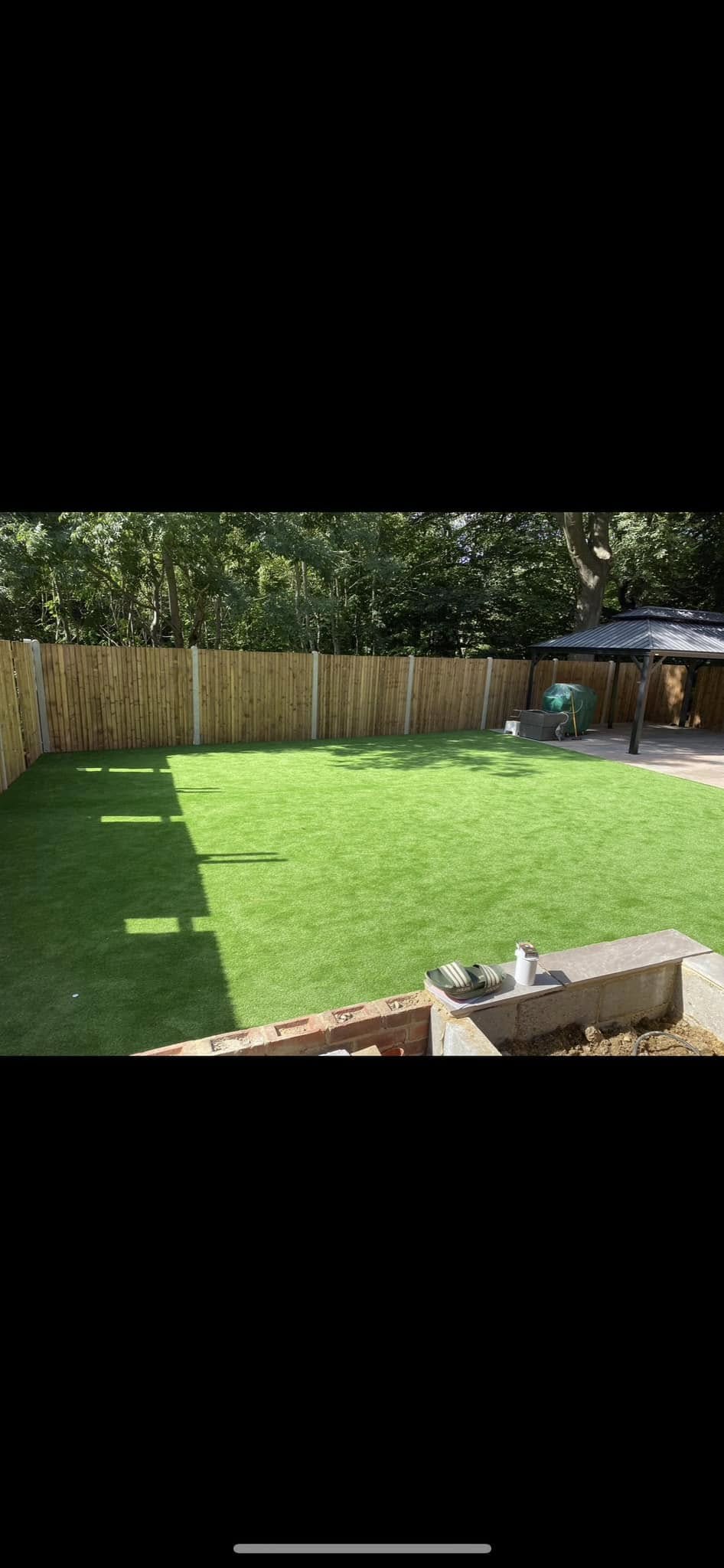
Master the technical standards of luxury multi-story extension engineering, structural box frame design, and Part L thermal optimization.
Executing a high-end, multi-story structural transformation is a complex exercise in civil engineering, spatial architecture, and building physics. Unlike standard, single-story domestic additions, multi-tier envelopes introduce massive static dead loads, intricate multi-axial stress fields, and demanding thermal boundary conditions.
For high-net-worth property owners across the South East, a premium property transformation must achieve more than a visual connection between interior spaces and external landscapes. It must function as an energy-efficient, structurally sound, and legally compliant architectural asset.
This manual details the structural mechanics, thermal balancing protocols, and multi-surface optimization workflows required to execute elite luxury house extensions kent.
1. Subterranean Load Balancing and Geotechnical Foundation Interfaces
The structural integrity of a multi-story extension is entirely dependent on the capacity of its subterranean foundation array to transfer heavy vertical load configurations down to a stable geological stratum. Adding a secondary or tertiary story exponentially increases the dead weight acting upon the ground footprint, requiring careful geotechnical soil profiling.
Navigating Cohesive Soil Shear Plan Realities
Across Kent and London, structural engineers must design foundation footprints to interface safely with highly challenging ground formations, particularly the heavy over-consolidated expansive clays native to the region. Clay soils exhibit high plasticity indices, meaning they experience significant volumetric expansion during wet winter periods and severe shrinkage desiccation during dry summer months.
+-----------------------------------------------------------------------+
|                    MULTI-STORY LOAD SPREAD AND ANCHORING              |
+-----------------------------------------------------------------------+
|                                                                       |
|         [ 2nd / 3rd Story Structure ]                                 |
|                     ||                                                |
|                     v  Vertical Compression Load Paths                |
|         [ Ground Floor Open Plan Structural Steel ]                   |
|                     ||                                                |
|                     v                                                 |
|         +-----------------------+                                     |
|         | CONCRETE FOUNDATION   |                                     |
|         +-----------------------+                                     |
|                     ||                                                |
|                     v  Deep Stress Dissipation Cone                   |
|       - - - - - - - - - - - - - - - - - - - - - - -                     |
|        UNSTABLE UPPER DESICCATION HORIZON                             |
|       - - - - - - - - - - - - - - - - - - - - - - -                     |
|                     ||                                                |
|                     v                                                 |
|         [ STABLE SUB-SURFACE CLAY STRATUM ]                           |
|                                                                       |
+-----------------------------------------------------------------------+
To prevent the new structural frame from suffering from differential settlement—where the extension shifts or sinks independently from the original historic building core—the foundation depth must bypass the upper unstable moisture-fluctuation zone. Traditional shallow strip footings are fundamentally inadequate for multi-story loads in these soils.
The engineering design must specify deep-trench mass concrete foundations extending to a minimum depth of one point five to two point five meters, or deploy engineered augered piling arrays. These deep systems ensure that the massive downward vertical compression vectors are anchored securely within stable, un-desiccated sub-surface ground layers.
2. Structural Steel Box Frames and Moment Frame Mechanics
To achieve the expansive, fluid, column-free internal spaces that define modern luxury architecture—such as seamless transitions into wide bi-fold door layouts—the lower tiers of a multi-story extension must rely on a highly rigid structural steel framework.
The Goalpost and Moment Frame Configuration
When load-bearing internal walls are extracted to open up a floor plan, the overhead weight of the upper masonry leaves, concrete floor screeds, and timber roof systems must be intercepted and rerouted. This is accomplished by installing an engineered structural steel box frame or a sequence of rigid moment frames (goalposts).
+-----------------------------------------------------------------------+
|                    STRUCTURAL STEEL MOMENT FRAME MATRIX               |
+-----------------------------------------------------------------------+
|                                                                       |
|             =============================================             |
|            ||            UNIVERSAL STEEL BEAM           ||            |
|            ||               (SPAN/360 MAX)              ||            |
|             =============================================             |
|                 ||                                   ||               |
|                 ||                                   ||               |
|         ========||========                   ========||========       |
|        [ CONCRETE PADSTONE ]                [ CONCRETE PADSTONE ]      |
|         ==================                   ==================       |
|                 ||                                   ||               |
|                 || UNIVERSAL                         || UNIVERSAL     |
|                 || STEEL COLUMN                      || STEEL COLUMN  |
|                 ||                                   ||               |
|                 v                                    v                |
|          [ REINFORCED FOOTING ]               [ REINFORCED FOOTING ]  |
|                                                                       |
+-----------------------------------------------------------------------+
A moment frame relies on full-strength welded or heavy-duty splice-plate bolted connections between the horizontal Universal Beams (UB) and vertical Universal Columns (UC). Unlike standard pinned joints, these rigid moment connections prevent any rotational movement at the intersections, converting lateral wind shear stresses and vertical point loads into controlled internal bending moments.
The structural steel must be specified to strict deflection index parameters, capping maximum vertical elastic deflection under full working loads at the total span length divided by three hundred and sixty to prevent structural plaster cracking or binding across window apertures.
Point-Load Interception and Padstone Engineering
The massive forces channeled down through the vertical steel columns cannot rest directly on standard blockwork or brick walls. The concentrated point load would instantly exceed the ultimate compressive strength of the masonry, causing localized crushing and structural failure.
The base of each steel column, and the ends of all primary horizontal beams bridging onto load-bearing masonry, must terminate on engineered precast concrete padstones. These padstones must be manufactured from high-compressive-strength concrete (minimum C40 mix) and bedded on high-density engineering bricks using high-strength structural mortars. The padstone acts as a point-load distribution cell, scattering the concentrated downward force vector across a wider horizontal surface area of the underlying masonry wall to ensure structural stability.
3. Superstructure Masonry Continuity and Structural Movement Protection
The connection interface between the original building envelope and the newly constructed multi-story extension represents a primary point of potential structural failure. The two structures will inevitably experience disparate thermal expansion and long-term soil settlement vectors.
Mitigating Shear Failure with Structural Tying Matrices
The new extension superstructure must never be rigidly bonded to the historic building fabric using alternating brickwork weaves. Forcing a rigid masonry tooth-bond across a moving joint configuration will generate intense shear stresses as the new structure stabilizes, resulting in clean, vertical structural fractures slicing through both facing leaves.
The engineering standard requires the installation of a clean vertical movement expansion joint at the structural intersection. The interface is managed using continuous stainless steel wall starter profiles mechanically anchored to the existing wall.
These tracks incorporate sliding tie-pins that bed directly into the horizontal mortar joints of the new brickwork leaf. This configuration provides absolute lateral stability against wind suction pressures while allowing the new multi-story extension to settle and move vertically without transferring damaging stress fields into the host property.
+-------------------------------------------------------------------------+
|                  MASONRY MTRL & COMPLIANCE STRUCTURAL CONFIGURATION     |
+-------------------------------------------------------------------------+
| Quality Check Parameter | Field Standard Target | Engineering Protocol  |
+-------------------------+-----------------------+-----------------------|
| Vertical Plumb Guard   | Max 2mm per 3 Meters  | Multi-Axis Laser Scan |
| Cavity Tie Distribution | 2.5 Ties per m² Min   | Staggered Grid Setup  |
| Bed Joint Thickness     | 10mm (+/- 2mm)        | Calibrated Gauge Rod  |
| Expansion Joint Width   | 10mm to 15mm Clean    | Closed-Cell Foam Pack |
+-------------------------+-----------------------+-----------------------|
Every course of the new superstructure must align precisely with masonry construction standards to guarantee uniform load distribution. To prevent long-term moisture accumulation or degradation at these key boundaries, the structural tying arrays should be routinely audited alongside any required brickwork repointing schedules.
4. Advanced Thermal Envelope Integrity and Approved Document Part L Compliance
Modern building control regulations enforce strict energy-conservation frameworks under Approved Document Part L. Achieving compliance across a multi-story extension requires a rigorous "fabric-first" approach to insulation engineering and thermal performance.
Decoupling the Envelope: U-Value Optimization Mechanics
The rate of thermal transmittance through the structural envelope is quantified as a U-value, measured in Watts per square meter per Kelvin. The lower the calculated U-value, the higher the insulation capacity of the wall assembly.
The mathematical model for calculating the global thermal transmittance requires analyzing the cumulative thermal resistance values of every individual component layer within the building envelope. This encompasses the external and internal surface thermal boundary layer resistances, and the physical thickness of each specific material layer divided by its certified thermal conductivity. To satisfy Part L mandates, the thermal transmittance of new external wall configurations must be optimized to a target threshold of zero point eighteen Watts per square meter Kelvin or lower.
To hit these metrics without building unwieldy, ultra-thick walls that reduce valuable internal floor space, luxury extensions deploy high-performance foil-faced Polyisocyanurate (PIR) or ultra-slim Phenolic foam insulation cores within the wall cavities.
Cold-Bridging Mitigation at Structural Junctions
An exceptionally low center-panel U-value can be completely compromised if the structural layout permits cold-bridging anomalies. A cold bridge occurs where highly conductive structural materials, such as raw steel beams or concrete lintels, cross completely through the insulation layer to create an open thermal pathway.
+-----------------------------------------------------------------------+
|                    STRUCTURAL STEEL BEAM THERMAL BREAK DETAIL         |
+-----------------------------------------------------------------------+
|                                                                       |
|   [ WARM INTERNAL ZONE ]       |X|       [ COLD EXTERNAL CAVITY ]     |
|   (Internal Living Area)       |X|       (Outer Facing Brickwork)     |
|   ======================       |X|       ========================     |
|   <--- UNIVERSAL STEEL BEAM --->|X|<--- RESIDUAL CAVITY VOID -------> |
|                                |X|                                    |
|                                |X| HIGH-DENSITY STRUCTURAL            |
|                                |X| THERMAL BREAK INTERFACIAL PAD      |
|                                                                       |
+-----------------------------------------------------------------------+
To eliminate cold bridging where structural steel cantilevers or interfaces with the external masonry leaf, high-density, structural thermal break pads manufactured from specialized fiber-reinforced resin composites must be inserted at all structural connection flanges. These structural pads possess immense compressive strength, allowing them to transfer heavy structural forces safely while completely blocking the outward migration of internal heat energy. This protection keeps internal plasterboard surfaces warm and permanently eliminates hidden interstitial condensation risks.
5. Architectural Glazing and Solar Gain Management Under Approved Document Part O
Luxury multi-story extensions frequently incorporate extensive architectural glazing profiles, including floor-to-ceiling slim-frame bi-fold doors, structural glass corners, and dramatic roof lantern systems. While maximizing internal daylight levels, unmanaged glazing expansions introduce high solar heat vectors that must be strictly regulated under Approved Document Part O (Overheating).
The Physics of the Greenhouse Effect in Modern Extensions
Solar radiation enters internal spaces as short-wave light energy, heating internal floors, furniture, and wall finishes. As these elements warm up, they re-radiate this absorbed energy outward as long-wave infrared thermal radiation.
Standard clear glass is highly opaque to long-wave infrared energy; the heat cannot pass back outward through the window panes and remains trapped inside the building envelope. During summer periods, this greenhouse effect can quickly raise internal temperatures past comfortable limits, creating severe thermal discomfort.
Calibrating Solar Factors and Low-E Glass Profiles
To satisfy Part O compliance parameters without relying on energy-intensive mechanical air conditioning networks, the glazing specification must carefully control the Solar Factor, quantified as the g-value. The g-value represents the total percentage of solar heat energy that passes completely through the glass assembly relative to the total incoming solar radiation.
+-------------------------------------------------------------------------+
|                  GLAZING FACTOR AND SOLAR LOAD CORRELATION              |
+-------------------------------------------------------------------------+
| Glazing Variant     | Certified g-Value Range | Optimal Structural Zone |
+---------------------+-------------------------+-------------------------|
| Standard Clear Unit | 0.72 to 0.78            | North-Facing Elevations |
| Low-E Thermal Shield| 0.60 to 0.65            | Eastern Morning Exposures|
| Solar Control Tint  | 0.35 to 0.45            | West-Facing Living Zones|
| Selective Coating   | 0.22 to 0.28            | South-Facing Lanterns   |
+-------------------------------------------------------------------------+
South-facing and west-facing elevations must deploy advanced selective solar control glasses. These units incorporate a microscopically thin, multi-layered metal oxide coating bonded permanently to the inner face of the external glass pane.
This invisible filter separates short-wave light rays from long-wave heat rays; it allows maximum natural daylight to illuminate the home asset while deflecting up to seventy percent of the incoming solar heat energy back out to the external atmosphere. This low g-value configuration stabilizes internal temperatures during summer peaks while preserving low U-values during winter heating periods.
6. Interfacing Luxury Landscapes with the Structural Frame Base
The baseline foundation layers of a multi-story extension must integrate with the surrounding external hardscapes to protect the asset from groundwater ingress and preserve neighboring amenities.
Preventing Moisture Bridging at the Patio Threshold
When installing high-end flush thresholds—where the internal floor level lines up seamlessly with an external patio walkway—the structural frame is vulnerable to moisture bridging. Rainwater splashing off external surfaces can bypass the damp proof course (DPC) if the external floor level is built too high against the structural masonry.
To isolate this risk, the installation must incorporate heavy-duty linear slot drainage channels running directly parallel to the glazing track. These channels capture immediate surface water sheets and route them down into the site's subterranean drainage infrastructure.
Furthermore, any sloped terracing or embankments slicing toward the extension footprint must be safely contained using engineered structural earth retaining walls designed to relieve lateral hydrostatic pressures and divert groundwater pathways away from the primary building frame.
Scaffold Load Distribution on High-Value Hardscapes
Constructing a multi-story extension requires the erection of extensive heavy-duty independent tube-and-fitting scaffolding matrices across the work footprint. When these vertical standards must be erected over premium ground surfaces, such as high-value vitrified porcelain slabbing patios, the high localized point loads can crush the underlying surface tiles.
+-----------------------------------------------------------------------+
|                    SCAFFOLD STANDARD BASE LEVEL DISPERSION            |
+-----------------------------------------------------------------------+
|                                                                       |
|                    ||  VERTICAL STEEL SCAFFOLD STANDARD               |
|                    ||  (Heavy Construction Dead Loads)                |
|                    vv                                                 |
|             +--------------+                                          |
|             | STEEL BASE   |                                          |
|             | PLATE ACC.   |                                          |
|         ========================                                      |
|        [ TIMBER SOLE BOARD PAD ]  <--- Spreads Point Load Horizontally|
|         ========================       Across Multiple Paving Slabs   |
|         ------------------------                                      |
|        [ PORCELAIN PAVING UNIT ]                                      |
|         ------------------------                                      |
|                                                                       |
+-----------------------------------------------------------------------+
Scaffold standards must never be placed directly onto finished paving tiles or block surfaces. The vertical baseplates must rest on thick timber sole boards or heavy-duty load-spreading pads spanning across multiple paving units.
This setup ensures that the dead load of the steel tubes and the dynamic live loads of workers and stored bricks are distributed across a wide surface area, preventing localized point loads from exceeding the compressive limit of the paving sub-grade. Furthermore, the entire workspace footprint beneath the scaffold frame must be covered with thick rubber stabilization mats to capture accidental tool drops and prevent impact fractures across the porcelain surfaces.
7. Phased Project Management Workflows for Multi-Story Extensions
The successful execution of a multi-story structural transformation requires a highly coordinated, phased project management workflow to ensure that all ground, structural framing, thermal, and regulatory phases interface cleanly without errors.
Phase 1: Pre-Commencement Planning, Structural Engineering, and Regulatory Checks
Before any structural site operations begin, the design framework must be fully established and verified.
- Engineering Computations: Submit comprehensive architectural drawing sets to a certified structural engineer to execute finite element load tracking analyses. The engineer must deliver formal calculation packages detailing the exact dimensions, weight capacities, and deflection tolerances for all Universal Beams, columns, and concrete padstones to satisfy Building Control Plan Checks.
- Utility Infrastructure Audits: Execute thorough ground scanning operations using high-sensitivity metal detectors and cable avoidance tools (CAT) to verify the paths of all buried utility lines across the proposed excavation footprint, ensuring total safety before heavy machinery is deployed.
Phase 2: Excavation Earthworks, Soil Stabilization, and Foundation Casting
This phase manages the heavy civil manipulation of the site terrain, moving from structural demolition to the creation of the core sub-surface levels.
- Subgrade Excavation: Deploy tracked excavators to clear away all old surface hardscapes, routing soil wastes via certified muck-away transport systems down to stable, un-desiccated clay strata.
- Foundation Placement: Install reinforcement steel cages and pour high-density structural mass concrete foundations, ensuring complete vibration processing to eliminate entrapped air pockets and guarantee ultimate load capabilities.
- Sub-Floor Assembly: Construct the insulated ground floor slab platform, incorporating high-performance damp proof membranes linked to the perimeter walls to block rising damp migration.
Phase 3: Structural Framing Erection and Envelope Progression
The phase where the extension envelope takes physical form, establishing the primary structural columns and load paths.
- Lower-Tier Masonry Construction: Construct the internal load-bearing block walls and external facing brick leaves up to the first-floor scaffolding level, installing stainless steel cavity wall ties at the mandatory two point five ties per square meter density.
- Steel Frame Deployment: Utilize heavy mechanical lifting equipment to position the structural steel Universal Beams and columns onto their engineered precast concrete padstones. Torque-bolt all connections to specified tension values to form a rigid structural frame.
- Upper-Tier Progression: Construct the second-story masonry superstructure over the steel frame grid, integrating insulated cavity closers at all window reveals and setting flexible cavity trays above all structural lintels.
Phase 4: Roof Structural Closure, Thermal Envelope Continuity, and Commissioning
The final technical phase where the structural frame is sealed against environmental exposure and prepared for internal fit-out operations.
- Roof Structural Assembly: Erect the timber roof framing matrix, installing a continuous warm-deck flat roof system or a fully ventilated cold-deck configuration that complies with Part F ventilation guidelines.
- Insulation Continuity Closures: Fit the rigid PIR or phenolic foam panels tightly inside the wall cavities, utilizing multi-foil sealing tapes across all joint lines to eliminate thermal anomalies and ensure a complete airtight barrier.
- Glazing Integration and Final Sign-Off: Install the solar-control glazed window units and bi-fold door systems, ensuring exact g-value compliance under Approved Document Part O. Conduct a thorough structural audit, inspect all moisture management paths, and secure formal Building Control sign-off for structural handover.